
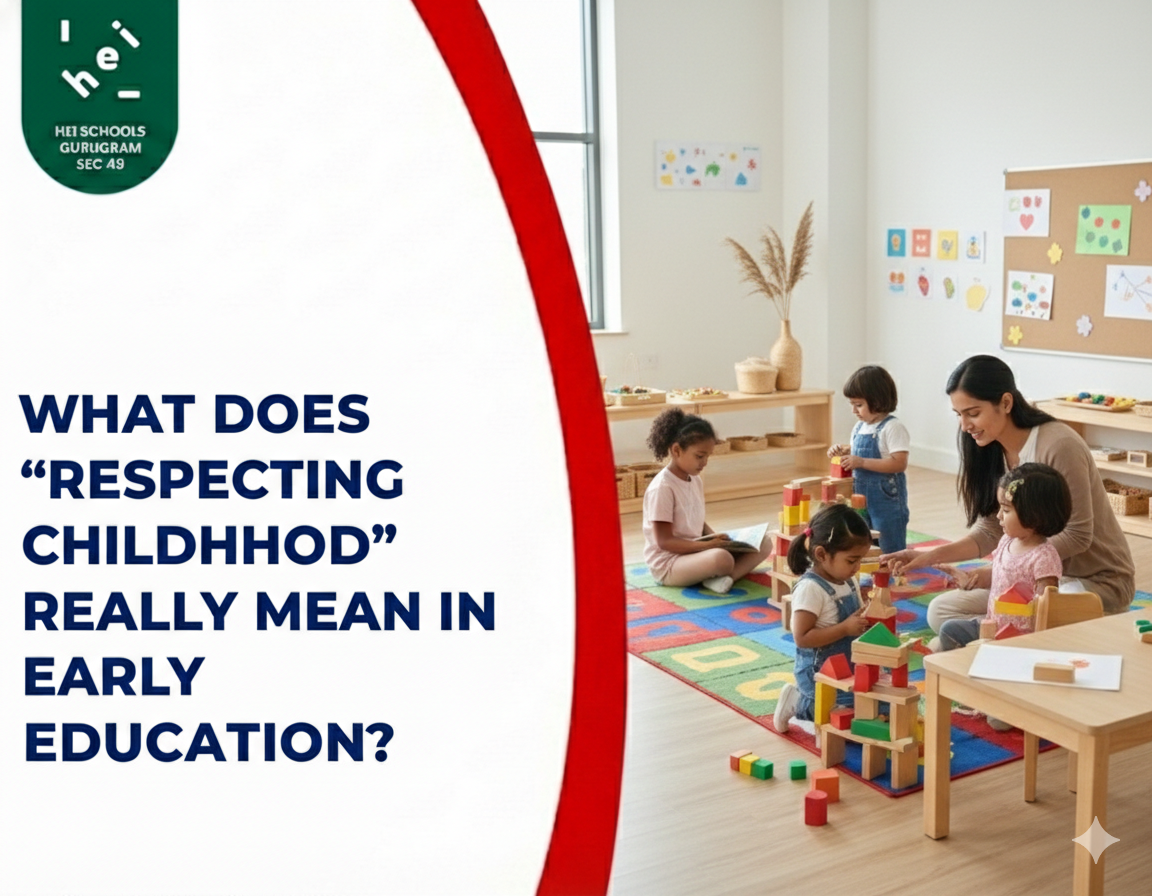
Introduction:
In today’s rapidly evolving world, the concept of “respecting childhood” goes beyond basic care and attention. It is about celebrating the individuality of each child and creating an environment that supports their emotional, intellectual, and social growth. At HEI Schools, this philosophy is especially important in early education, where a child’s foundational years are crucial to their future success. For parents seeking the Best Pre Schools in Gurgaon, truly understanding what it means to “respect childhood” is key to fostering a child’s well-being and setting them up for a prosperous future.
About Us:
At HEI Schools Gurugram, respecting childhood means creating an environment where children’s innate curiosity is cherished. Our Finnish-inspired curriculum emphasizes play-based learning, allowing children to explore at their own pace. Through hands-on activities, outdoor adventures, and creative play, we nurture their emotional, intellectual, and physical growth. We believe that every child deserves a space to grow without pressure, fostering confidence, creativity, and self-expression from an early age.
The Foundation of Respect in Early Education
Respecting childhood is about recognizing that early years are not merely preparation for school but a critical period in a child’s life where their personality, values, and potential are shaped. Respecting this phase means understanding that every child’s developmental journey is unique. It is essential that early education settings honor this individuality, creating environments that celebrate curiosity, creativity, and exploration rather than imposing rigid, one-size-fits-all approaches.
In practice, respecting childhood involves offering children the freedom to learn through play and experience. It means giving them the space to make decisions, explore their surroundings, and solve problems at their own pace. This philosophy aligns with the belief that early education should be about cultivating a love for learning, not forcing academic rigor too early.
The Role of Teachers as Facilitators
At the heart of respecting childhood in early education is the role of the teacher. Rather than being a mere instructor, a teacher must act as a facilitator who guides children through their exploration and learning. In this approach, teachers acknowledge the developmental stages of each child and adapt their teaching styles to meet the varying needs of the students.
Teachers in early education settings that embrace the concept of respecting childhood are trained to listen to children, validate their feelings, and encourage them to express themselves in their unique ways. This empathetic, child-centered approach fosters a trusting relationship between educators and children, allowing the students to feel valued and respected.
Creating a Safe and Nurturing Environment
Respecting childhood also involves providing children with a safe and supportive environment where they feel secure enough to express themselves. This environment should be one where children are encouraged to take risks, make mistakes, and learn from them. Emotional safety is just as important as physical safety; children should feel that their emotions are understood and respected.
In a school that respects childhood, children are given the opportunity to engage in activities that promote emotional intelligence, such as role-playing, group activities, and discussions. These activities encourage empathy, cooperation, and communication skills, which are vital components of a child’s emotional development.
Conclusion:
Respecting childhood is not merely about protecting children from stress or pressure but about creating an environment that fosters their growth, independence, and emotional well-being. In early education, this means providing children with the tools they need to explore, learn, and thrive at their own pace, while ensuring that their emotional and intellectual needs are met with respect and care. For parents looking for the Best Pre Schools, finding a school that respects childhood in its truest sense can provide a nurturing foundation for their children’s lifelong success.
FAQs:
- What does “respecting childhood” mean in early education?
It’s about honoring each child’s unique growth and providing a nurturing environment that fosters their individuality.
- Why is respecting childhood important in early education?
It builds self-confidence, emotional intelligence, and a love for learning, setting the foundation for lifelong success.
- How can preschools respect each child’s individuality?
By focusing on personalized learning and allowing children to explore at their own pace, respecting their developmental needs.
- How do teachers create a respectful environment for children?
Teachers foster respect by listening to children’s voices, celebrating diversity, and providing opportunities for self-expression.
- Can respecting childhood impact long-term academic success?
Yes! Children who are respected in their formative years are more likely to develop a strong, positive academic identity.
- Where can I find a preschool that respects childhood?
At HEI Schools, we prioritize each child’s unique journey, fostering respect, confidence, and growth in our nurturing environment.