
Introduction:
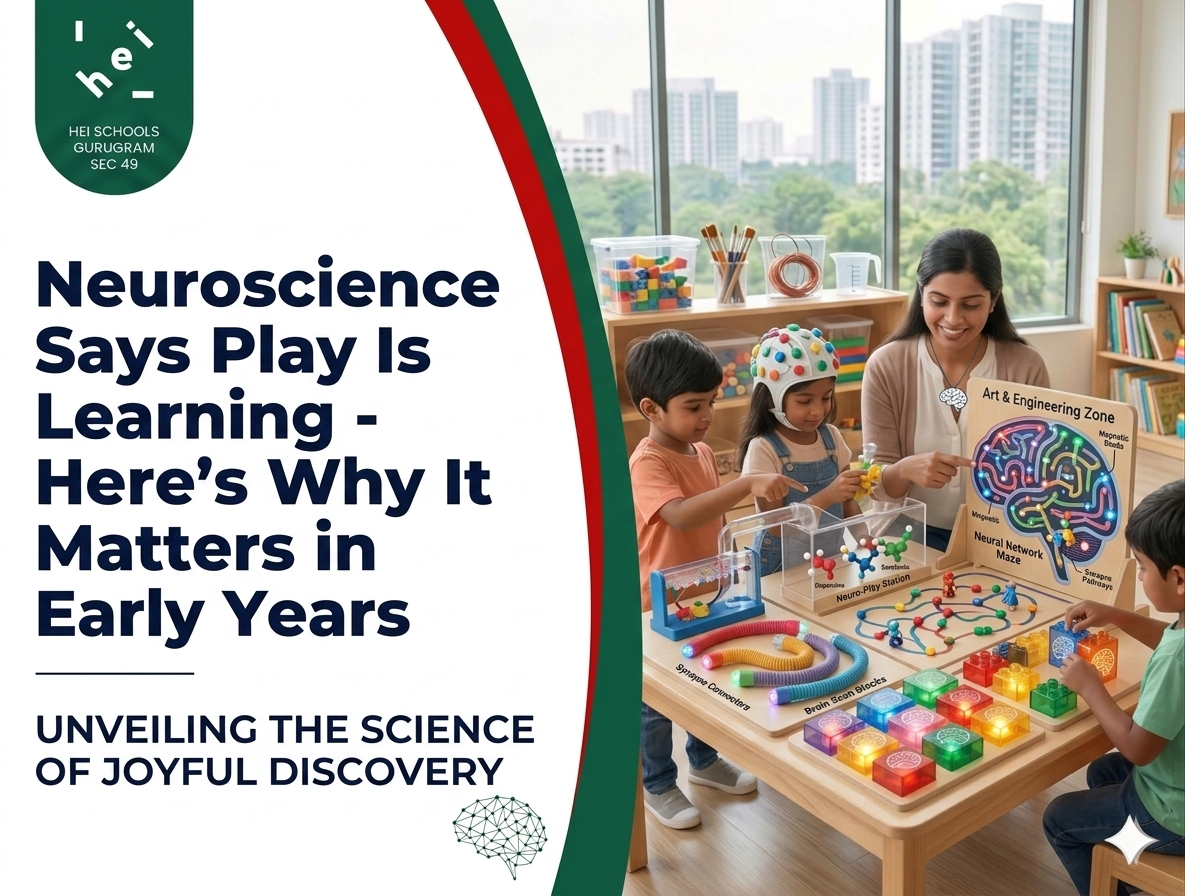
Modern research in neuroscience has transformed the way we understand early childhood education. At HEI School Gurugram, experts now agree that play is not just a leisure activity—it is a powerful learning process that shapes a child’s brain. The best daycare in gurgaon are embracing this scientific understanding by creating play-based environments that support cognitive, emotional, and social development. When children learn through play, their brains form stronger connections that lay the foundation for lifelong learning.
About Us:
HEI Schools Gurugram Sector 49 follows a research-based approach that recognizes play as essential for brain development. Through sensory play, role-play, music, movement, storytelling, art, and outdoor exploration, children naturally build cognitive, social, emotional, and language skills. Our Finland-inspired curriculum includes theme-based activities, mindfulness moments, and collaborative learning experiences. With personalized attention and a nurturing environment, we support healthy brain development while making learning joyful and meaningful.
How the Brain Develops in Early Childhood
The first five years of life are the most critical for brain development. During this period, a child’s brain forms millions of neural connections every second. These connections grow stronger through experiences, interactions, and exploration.
Play provides exactly the kind of stimulation young brains need. Whether children are building blocks, pretending, drawing, or exploring outdoors, their brains are actively processing information, solving problems, and making sense of the world around them.
Play Builds Cognitive Skills
From a neuroscience perspective, play strengthens key cognitive functions such as attention, memory, and problem-solving. Activities like puzzles, sorting, stacking, or role-play help children develop logical thinking and early reasoning skills.
For example:
- Building structures improves spatial awareness and planning.
- Pretend play enhances imagination and language development.
- Simple games improve focus and working memory.
These experiences activate multiple areas of the brain simultaneously, making learning deeper and more meaningful than passive instruction.
Emotional Development and Brain Health
A child’s emotional well-being plays a major role in learning. Neuroscience shows that when children feel safe, happy, and relaxed, their brains are more receptive to new information.
Play-based environments reduce stress and anxiety, allowing children to learn naturally. Activities such as group games, storytelling, music, and free play help children express emotions, develop self-control, and build resilience.
Positive interactions with teachers and peers also strengthen the brain’s social and emotional networks, which are essential for confidence and future success.
The Power of Social Play
When children play together, they learn more than just social skills. Collaborative play strengthens communication, empathy, and cooperation while also supporting brain development.
Through group activities, children practice:
- Sharing and turn-taking
- Understanding others’ perspectives
- Negotiating and solving conflicts
- Building friendships
These experiences enhance emotional intelligence and help children adapt to structured learning environments later.
Movement, Sensory Play, and Brain Connections
Physical activity and sensory experiences are closely linked to brain development. Running, climbing, dancing, and outdoor exploration improve coordination while strengthening neural pathways related to focus and self-regulation.
Sensory play—such as water play, sand exploration, or art activities—stimulates multiple senses at once, helping the brain process and organize information more effectively.
The best daycare in gurgaon integrate movement and sensory-rich environments to support both physical and cognitive growth.
Why Play-Based Learning Matters for the Future
Children who learn through play develop essential life skills such as creativity, curiosity, adaptability, and independent thinking. Neuroscience confirms that active, hands-on learning builds stronger neural connections than early academic pressure or rote learning.
When children enjoy the learning process, they develop a positive attitude toward education, making them more motivated and confident learners in the years ahead.
Creating the Right Learning Environment
A play-based environment is thoughtfully designed to encourage exploration and discovery. Activity corners, creative spaces, outdoor play areas, and interactive learning materials allow children to move freely, experiment, and learn at their own pace.
Conclusion:
Neuroscience clearly shows that play is one of the most effective ways young children learn and grow. By supporting brain development, emotional health, and essential life skills, play-based education prepares children for both academic success and future challenges. Choosing a daycare that values learning through play ensures your child develops into a confident, curious, and capable learner ready to thrive in school and beyond.
FAQs:
Q1. How does HEI School apply brain-based learning?
Through play, sensory activities, movement, and social interaction that strengthen neural connections.
Q2. Why is play important for brain development?
Play activates multiple brain areas, improving memory, attention, and problem-solving.
Q3. Does HEI School include sensory learning?
Yes, through sand play, water activities, art, and tactile exploration.
Q4. How does HEI School support emotional brain development?
By creating safe, stress-free environments with supportive teachers.
Q5. Can play improve focus?
Yes. Structured play activities at HEI School help build attention and self-regulation.
Q6. Why do experts recommend play-based day care?
Because it supports both cognitive and emotional development.