

Introduction:
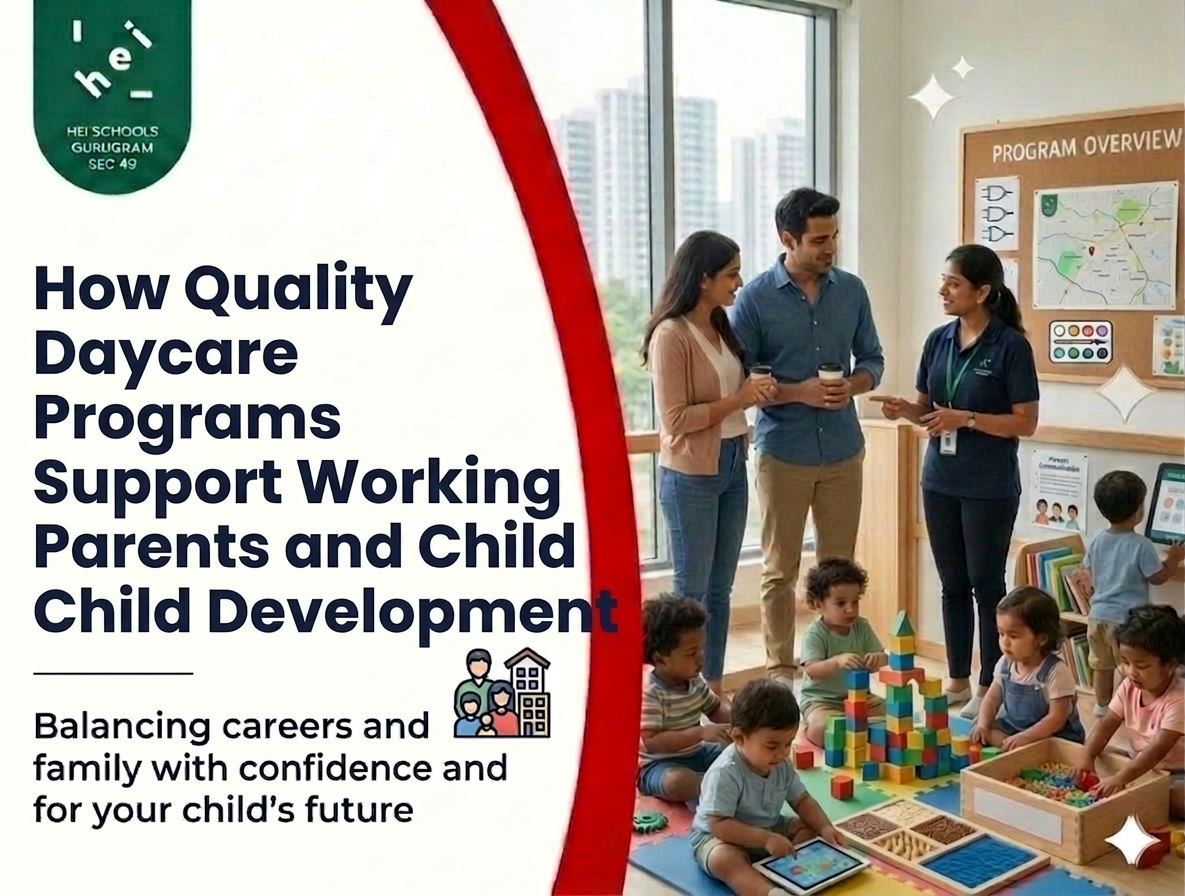
In today’s fast-paced world, balancing professional responsibilities and family life can be challenging for many parents. At HEI, the Best Daycare in Gurgaon where with demanding work schedules and growing career aspirations, families increasingly rely on dependable childcare solutions that ensure their children are safe, nurtured, and continuously learning. A high-quality daycare program not only supports working parents but also contributes significantly to a child’s emotional, social, and cognitive development.
About Us:
At HEI Schools Gurugram Sec 49, early childhood learning is designed to support both children and modern families through a nurturing daycare and preschool environment inspired by Finland’s education philosophy. The school offers creative learning spaces, outdoor exploration areas, and engaging activities that encourage curiosity and independence.
A Reliable Support System for Working Parents
One of the biggest concerns for working parents is finding a place where their child feels secure and cared for during the day. Quality daycare centers provide structured routines, trained caregivers, and a safe environment that allows parents to focus on their work with peace of mind.
Parents can confidently pursue their professional goals knowing their children are engaged in meaningful activities rather than simply being supervised. A well-organized daycare facility becomes an extension of the family environment, offering comfort, stability, and trust. When parents feel assured about their child’s wellbeing, it reduces stress and improves work-life balance.
Encouraging Early Social Development
Daycare programs offer children the opportunity to interact with peers from an early age. This exposure plays a vital role in developing communication skills, cooperation, and empathy. Children learn how to share, take turns, and express their feelings in a healthy way.
For many children, daycare is their first experience outside the home. Through guided activities and supervised play, they gradually learn independence while still feeling supported by caring educators.
Building a Structured Daily Routine
Consistency is an important factor in early childhood development. High-quality daycare programs create structured daily schedules that include playtime, learning activities, rest periods, and meals.
Activities are usually designed to balance fun with learning, ensuring children remain engaged while gradually building important skills such as concentration, problem-solving, and creativity.
Supporting Cognitive and Language Development
A well-designed daycare environment stimulates a child’s curiosity and encourages exploration. Through storytelling sessions, music, art, puzzles, and hands-on learning activities, children develop critical thinking and language abilities.
Promoting Emotional Wellbeing
Emotional security is essential for healthy childhood development. Quality daycare programs focus on nurturing relationships between caregivers and children, ensuring every child feels valued and understood.
A supportive environment allows children to develop resilience and self-esteem, which are crucial for their long-term personal growth.
Encouraging Physical Development Through Active Play
Young children require plenty of movement and physical activity to support healthy growth. Daycare programs include outdoor play, movement-based games, and motor skill activities that enhance physical coordination and strength.
Balanced daycare programs ensure that children spend time both indoors and outdoors, providing opportunities for exploration and active engagement.
Creating a Learning Environment That Inspires Curiosity
A high-quality daycare environment is designed to inspire creativity and exploration. Classrooms are often organized into different learning areas such as reading corners, art stations, building zones, and sensory play spaces.
When children are given the freedom to explore within a structured setting, they develop a lifelong love for learning.
Strengthening Parent–Caregiver Communication
Another key advantage of quality daycare programs is the strong communication between caregivers and parents. Regular updates, progress discussions, and daily feedback help parents stay informed about their child’s development.
Parents appreciate being actively involved in their child’s growth journey, even while managing busy work schedules.
Preparing Children for Future Learning
Quality daycare programs lay the foundation for future academic success. Children who experience structured early learning environments often adapt more easily to preschool and primary school settings.
Through interactive learning and guided play, children develop attention span, curiosity, and a positive attitude toward education. These early experiences help them become confident learners who are ready to embrace new challenges.
Conclusion:
Modern families require childcare solutions that support both parental responsibilities and a child’s developmental needs. A high-quality daycare program serves as a nurturing environment where children grow socially, emotionally, and intellectually while parents manage their professional commitments.
FAQs:
- Why is daycare important for working parents?
Daycare provides a safe and structured environment where children can learn and play while parents focus on their professional responsibilities. - How do daycare programs support child development?
Quality daycare programs encourage social interaction, creativity, and early learning through guided activities and play. - Do daycare centers help children become more independent?
Yes, regular routines and peer interaction help children develop independence and confidence from an early age. - How do daycare programs support emotional growth?
Children learn to express feelings, build friendships, and develop trust through nurturing relationships with caregivers. - What activities are usually included in daycare programs?
Storytelling, art, music, group games, and outdoor play are commonly used to promote learning and engagement. - How can parents know if a daycare program is suitable for their child?
Parents should observe the environment, teacher interaction, safety measures, and the variety of learning activities offered.
