

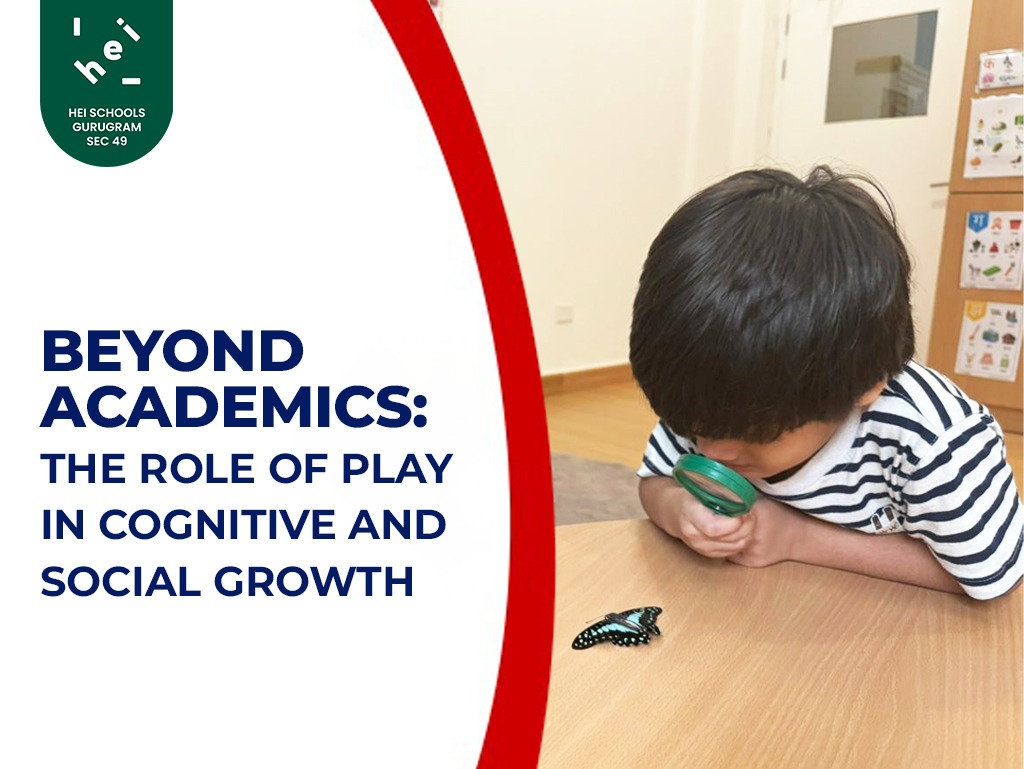
Introduction:
In early childhood education, the concept of play has gained significant recognition for its far-reaching benefits. While academics are important, play is an equally essential part of a child’s overall development. It plays a crucial role in fostering cognitive, social, and emotional growth, laying the foundation for future learning. At HEI School, the Best Daycare Schools in Gurgaon delves into the pivotal role of play in early childhood education, highlighting its impact on cognitive development, social skills, and emotional resilience. Drawing insights from leading early childhood education programs, including some of the best daycare schools, we explore why play is vital for a child’s holistic growth.
About Us:
At HEI Schools Gurugram, Sector 49, we embrace the power of play as a vital tool in fostering cognitive and social growth in young learners. Our Finnish‑inspired curriculum, rooted in research, integrates play-based learning into every aspect of the child’s day. Through guided play, children develop essential skills such as problem-solving, creativity, and teamwork. In our vibrant classrooms and outdoor spaces, students engage in activities that nurture their imagination, collaboration, and communication. This approach helps them build strong social bonds, enhance emotional intelligence, and become curious, confident, and capable learners, laying the groundwork for future academic success.
1. Cognitive Growth through Play
Cognitive development in young children refers to the development of their thinking, problem-solving, and learning abilities. Play, whether it’s imaginative play, building with blocks, or engaging in role-playing games, stimulates the brain and fosters intellectual growth.
Enhances Problem-Solving Skills
When children engage in play, they often encounter challenges that require solutions. Whether it’s solving a puzzle, constructing a fort, or figuring out how to make a toy move, children learn to think critically and develop problem-solving skills. For example, when playing with building blocks, a child decides how to balance the pieces and test different combinations. Such activities encourage logical thinking and creativity, helping children learn how to approach problems methodically.
Encourages Language Development
Play also contributes significantly to language development. During play, children often engage in conversations with peers, adults, or even themselves, which enhances vocabulary, grammar, and communication skills. For instance, when playing “house,” children use complex sentences, role-specific vocabulary, and learn to express their ideas effectively. This verbal interaction strengthens both their expressive and receptive language skills, which are crucial for later academic success.
Stimulates Imagination and Creativity
Imaginative play, where children pretend to be something or someone else, is an excellent exercise for developing creativity. Whether they are pretending to be a doctor, teacher, or astronaut, they use their imagination to build entire worlds and scenarios. This kind of play helps children develop abstract thinking, a key component of cognitive development. By being imaginative, they learn to think outside the box and explore various possibilities.
2. Social Growth and Play
Beyond cognitive benefits, play also plays a critical role in social development. It provides an opportunity for children to learn essential social skills, which are vital for their future interactions and relationships.
Promotes Cooperation and Teamwork
Children engage in cooperative play when they interact with peers during group activities. Playing team-based games, such as building a tower together or playing a sport, helps children learn how to collaborate, share, and take turns. These interactions teach them the importance of working with others toward a common goal, fostering a sense of cooperation.
Develops Emotional Regulation
Through play, children learn to manage their emotions and navigate social situations. When children play with others, they inevitably face moments of frustration, such as when they lose a game or someone takes their toy. Such instances provide opportunities for children to practice self-regulation, understanding the need to express frustration constructively or take turns without becoming upset. These emotional experiences teach children empathy, patience, and the ability to cope with disappointment.
Builds Friendships
Play offers the perfect setting for children to form and strengthen friendships. As children play together, they learn about the importance of social bonds, sharing, and mutual respect. Friendships formed through play lay the groundwork for future interpersonal relationships, teaching children the values of kindness, trust, and support.
3. The Role of Play in Developing Emotional Resilience
In addition to cognitive and social growth, play is essential for emotional development. It equips children with the emotional resilience needed to handle life’s challenges.
Enhances Self-Esteem
When children engage in play, they experience a sense of achievement and mastery. Whether they successfully complete a puzzle, build a strong tower with blocks, or win a game, these small victories boost their self-confidence. As children experience success through play, their self-esteem grows, and they begin to recognize their abilities. This positive self-image contributes to their emotional resilience, preparing them to tackle challenges with confidence in the future.
Teaches Conflict Resolution
Play provides ample opportunities for children to resolve conflicts in a safe and supportive environment. Whether it’s negotiating roles in a game or agreeing on the rules of play, children learn how to resolve disagreements by listening, compromising, and collaborating. These experiences help children develop conflict resolution skills, which are invaluable in later life when faced with challenging social situations.
Provides a Safe Space for Expression
Play also offers a safe space for children to express their emotions. Through pretend play or storytelling, children often work through their fears, anxieties, and frustrations. For example, a child who is scared of the dark may pretend to be a superhero saving the world from monsters. This process of emotional expression allows children to gain control over their emotions and build resilience in the face of adversity.
4. Play as a Tool for Holistic Development
While cognitive, social, and emotional growth are crucial aspects of child development, play also fosters a more integrated approach to learning. It supports the development of physical, creative, and adaptive skills, creating well-rounded individuals.
Physical Development
Many forms of play, such as running, jumping, and climbing, support physical development. Gross motor skills like balancing, walking, and throwing are developed through active play, while fine motor skills such as hand-eye coordination are strengthened through activities like drawing, building, and crafting. Physical play encourages children to stay active, which is essential for maintaining overall health and well-being.
Fosters Independence
Through independent play, children learn to explore their world and make decisions on their own. Whether it’s choosing a toy or deciding how to play a game, children develop autonomy, which is critical for building self-confidence and independence. This sense of self-reliance is beneficial both in educational settings and throughout life.
Nurtures Curiosity and Exploration
Play encourages children to explore new ideas, environments, and experiences. It sparks curiosity, allowing children to ask questions and seek answers. Whether through outdoor exploration or playing with new toys, children naturally engage in discovery-based learning. This fosters a lifelong love for learning and inquiry, essential for intellectual growth.
Conclusion:
The benefits of play in early childhood education cannot be overstated. Beyond the obvious enjoyment that play brings, it serves as a powerful tool for cognitive, social, emotional, and physical development. Play enhances problem-solving skills, nurtures creativity, builds social bonds, and promotes emotional resilience. It empowers children to become curious, independent, and confident learners, ready to face the challenges of the future.
Leading early childhood education programs, such as those found in the best daycare schools, integrate play into their curriculum as a vital component of their approach to holistic development. By recognizing the importance of play, these institutions provide children with a strong foundation for success in both academics and life.
FAQs:
Q1: How does play impact a child’s cognitive development?
A1: Play encourages problem-solving, creativity, and enhances brain development—key components of cognitive growth.
Q2: Can play enhance emotional intelligence in early childhood?
A2: Yes! Play helps children understand emotions, improving empathy, self-regulation, and social skills.
Q3: Why is play-based learning effective in pre-schools?
A3: It engages children actively, fostering critical thinking, creativity, and social interactions in a fun and natural setting.
Q4: How can play improve social skills in children?
A4: Through group play, children learn cooperation, sharing, and conflict resolution, vital for social development.
Q5: Does play-based learning benefit children in the long run?
A5: Absolutely! Children develop resilience, problem-solving skills, and creativity, which contribute to future success.
Q6: Which school focuses on play-based learning for early childhood?
A6: HEI Schools offer a unique play-based curriculum that promotes cognitive and social growth in a safe, nurturing environment
