
Introduction:
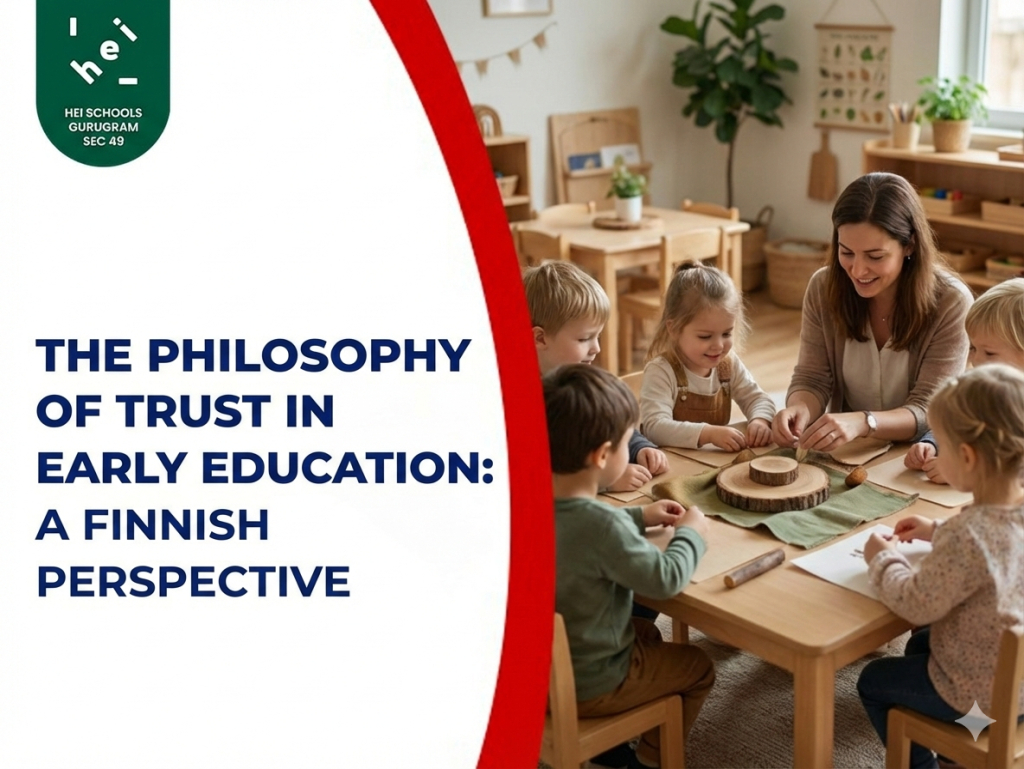
In the field of early childhood education, trust plays an integral role in shaping the way children learn and grow. At HEI School, the Best Daycare Schools in Gurgaon which is one of the most effective and globally recognized models that emphasizes trust in education is the Finnish approach. Finland’s education system is lauded worldwide for its success, and the foundational trust placed in teachers, students, and parents has proven to be a key pillar of this success. In this article, we explore the philosophy of trust in early education from a Finnish perspective, highlighting how this approach fosters independence, creativity, and emotional well-being in children.
About Us:
At HEI Schools Gurugram, Sector 49, we draw upon Finland’s world-renowned educational philosophy that places trust at the heart of early learning. We believe that when children are trusted, they develop a sense of autonomy and responsibility, which in turn fosters curiosity, creativity, and self-confidence. Our approach revolves around creating a safe and nurturing environment where children are encouraged to explore, experiment, and express themselves freely. The Finnish perspective emphasizes the importance of trusting educators to guide children through their learning journey, allowing them to foster meaningful relationships and build a deep connection to the material. We integrate this philosophy into every aspect of our curriculum, where play-based learning, collaborative activities, and individual exploration help children develop emotionally, socially, and intellectually. By focusing on trust in our interactions with students, we ensure that every child feels valued, respected, and empowered to take ownership of their learning. At HEI Schools Gurugram, Sector 49, we create an atmosphere of mutual trust and respect that fosters a love for learning and prepares children for success in the future.
1. Building Trust Through Teacher Autonomy
In Finland, teachers are regarded as professionals with the autonomy to make decisions that best serve their students’ needs. This trust in educators is not just theoretical but is backed by the rigorous teacher training programs in Finland. Teachers are required to have a master’s degree in education and are trained to think critically, creatively, and adaptively. This level of trust in teachers is crucial because it allows them to implement personalized learning experiences for their students. By being trusted to make decisions based on their expertise and understanding of each child’s needs, teachers are empowered to create an environment where children feel secure, valued, and ready to explore.
2. Trust Between Parents and Educators
In Finnish early education, the partnership between parents and educators is central to building a supportive environment for the child. Finnish educators make it a priority to communicate regularly with parents, discussing children’s development, challenges, and successes. This constant feedback loop builds trust between the two parties, ensuring that children receive consistent support both at home and in school. Parents are encouraged to be active participants in their child’s education, attending parent-teacher meetings, contributing to the curriculum, and even collaborating on school events. This partnership helps create a shared responsibility for the child’s growth and development, reinforcing the idea that trust is mutual.
3. Trust in Children’s Abilities
One of the unique features of the Finnish educational system is the inherent trust in children’s capabilities. Finnish educators believe that children are naturally curious and capable learners. This trust is demonstrated through an approach that encourages self-directed learning, where children are given the freedom to explore subjects that interest them and develop skills at their own pace. Rather than relying solely on traditional teaching methods, the Finnish system emphasizes experiential learning and problem-solving, fostering a sense of independence and self-confidence in children. This trust in children’s abilities nurtures a love of learning and a sense of ownership over their educational journey.
4. Emotional and Social Trust in Education
The Finnish approach to early education places a strong emphasis on emotional and social learning. Educators recognize that in order for children to learn effectively, they must first feel safe, secure, and emotionally supported. This trust is established through nurturing teacher-student relationships, where children are encouraged to express their feelings, build empathy, and develop social skills. By prioritizing emotional well-being, Finnish educators create an environment where children feel confident in their ability to interact with others and handle challenging social situations. This emotional trust lays the foundation for healthy relationships and positive social behaviors that will serve children throughout their lives.
5. Trust in the Learning Environment
Finnish early education also places a great deal of trust in the learning environment itself. Schools in Finland are designed to be child-centered, offering spaces that are open, flexible, and conducive to exploration. Classrooms are often filled with natural light, comfortable furniture, and materials that encourage hands-on learning. Outdoor play is also an integral part of the Finnish education system, as it is believed that children learn best when they are free to explore and engage with their environment. This approach fosters trust in the environment as a space that supports the child’s development and allows them to discover the world around them in a meaningful and authentic way.
6. Encouraging Risk-Taking and Independent Thinking
Trust in Finnish early education extends beyond the classroom to include the encouragement of risk-taking and independent thinking. Children are given the freedom to make choices, try new things, and learn from their mistakes. This approach encourages children to take risks in a safe and supportive environment, whether it’s trying out a new activity, solving a challenging problem, or navigating a social situation. By allowing children to take ownership of their learning and make decisions independently, Finnish educators help develop critical thinking skills and resilience. This trust in a child’s ability to learn from their experiences fosters creativity and adaptability, traits that are essential in today’s ever-changing world.
7. Trust and the Role of Play
Play is considered the most important form of learning in Finnish early education, and it is given ample time and space throughout the school day. Through play, children develop a wide range of skills, from language development to social interactions and problem-solving. Finnish educators trust in the power of play as a vehicle for learning and provide opportunities for children to engage in both structured and unstructured play. This trust in play-based learning fosters creativity, imagination, and social competence. Children learn through play by exploring their interests, negotiating with peers, and solving problems in real-time, all of which contribute to their development as confident, capable learners.
8. Trust in Slow Learning and Long-Term Development
Another key aspect of the Finnish approach to education is the emphasis on slow learning and long-term development. Finnish educators do not rush children through the educational process but instead focus on providing a strong foundation for lifelong learning. They trust that children will develop at their own pace, with a focus on quality rather than speed. This philosophy allows children to build deep, meaningful connections with what they learn, and it ensures that they are well-prepared for future academic challenges. This slower, more deliberate approach to learning respects the individual learning journey and allows children the time they need to develop the skills and knowledge required for success.
9. Building Trust Through Collaboration
Collaboration is a central tenet of Finnish educational philosophy, and it plays an essential role in the development of trust among children, educators, and parents. In Finland, schools often encourage collaborative learning activities, where children work together on projects and share ideas. This collaboration fosters trust between students, as they learn to listen to and respect each other’s perspectives. Furthermore, collaborative learning helps children develop social and emotional skills, such as empathy and communication, that are essential for future success. By fostering a collaborative environment, Finnish educators help children understand the value of working together, not just in the classroom but throughout their lives.
Conclusion:
The philosophy of trust in Finnish early education is a powerful approach that shapes not only how children learn but also how they interact with the world around them. Trust in teachers, parents, children’s abilities, the learning environment, and the learning process itself forms the foundation of the Finnish education system. By emphasizing emotional well-being, creativity, independence, and collaboration, Finnish educators prepare children to thrive in an ever-changing world. Trust is not just a philosophical ideal; it is a practical framework that empowers children to become confident, capable, and compassionate individuals, ready to face the challenges of tomorrow’s world. By integrating these principles, early education centers around the globe can offer children the support they need to develop the skills and mindset for success.
FAQs:
- What role does trust play in Finnish education?
Trust in teachers, children, and parents fosters a supportive, child-centered learning environment that encourages growth and independence. - How does Finnish education encourage critical thinking?
Finnish schools empower children by trusting them to think critically, make decisions, and solve problems independently from an early age. - How does trust between parents and educators benefit children?
Consistent communication and collaboration between parents and educators build trust, ensuring children receive comprehensive support. - Why is emotional support crucial in early education?
Emotional trust in educators creates a safe environment where children feel secure to explore, interact, and learn without fear of judgment. - How do Finnish schools balance play and learning?
Play is a central part of Finnish education, where children learn social, cognitive, and motor skills in a trusting, creative space. - How does HEI Schools incorporate trust in its curriculum?
HEI Schools foster trust in their students, educators, and parents, creating a collaborative and nurturing environment for children’s growth.
