

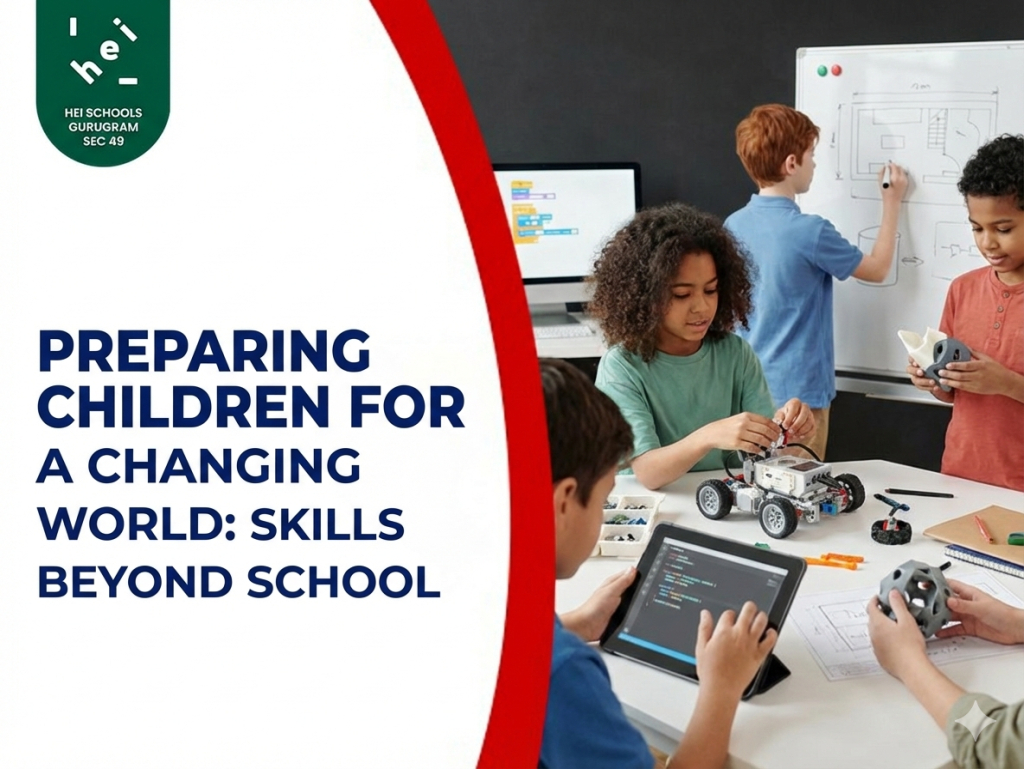
Introduction:
In today’s rapidly evolving world, the demands on future generations are changing faster than ever before. As industries advance through technology, innovation, and globalization, it’s essential that children are equipped not only with academic knowledge but with the skills necessary to thrive in a diverse, dynamic environment. At HEI School, the Top 10 Pre Schools in Gurgaon where these early childhood education plays a pivotal role in preparing children for this future by instilling crucial life skills that will serve them well beyond the classroom. In this article, we will explore the key skills that children should develop to succeed in a changing world, particularly through the lens of progressive pre-schools that focus on holistic, child-centered learning.
About Us:
At HEI Schools Gurugram, Sector 49, we believe that education should be about much more than academic knowledge. We focus on preparing children for a rapidly evolving world by fostering essential skills beyond school. Our curriculum, rooted in the Finnish educational philosophy, emphasizes creativity, critical thinking, and problem-solving. Through hands-on learning experiences, we equip children with the skills they need to navigate a complex future. Our dynamic environment encourages children to embrace challenges, collaborate with peers, and think independently. Activities like outdoor exploration, interactive STEAM projects, and artistic expression foster essential life skills such as resilience, communication, and empathy. In addition to academics, we offer extracurricular activities like music, sports, and creative arts that help children grow holistically, boosting their confidence and social development. By nurturing these skills early on, we ensure our students are not just ready for school, but for life itself, prepared to thrive in a fast-changing world.
1. Critical Thinking and Problem Solving
Critical thinking is one of the most sought-after skills in the modern world. It helps children analyze situations, make informed decisions, and solve complex problems. A strong foundation in critical thinking during early childhood can foster creativity, curiosity, and a willingness to explore new ideas. Through engaging activities like puzzles, games, and collaborative projects, young learners can develop the ability to think critically and work through challenges independently. Encouraging children to ask questions, seek answers, and reflect on their learning processes will prepare them to tackle the unknowns of the future with confidence and creativity.
2. Adaptability and Flexibility
The world is changing at an unprecedented rate, and the ability to adapt to new circumstances is more important than ever. From evolving technology to shifting social dynamics, children need to learn how to adjust and thrive in changing environments. Early childhood education fosters adaptability by exposing children to new ideas, activities, and experiences that encourage flexibility. By engaging in role-playing, cooperative learning, and outdoor exploration, children learn to adapt their thinking and behavior to different situations, setting them up for success in the face of future uncertainties.
3. Emotional Intelligence and Social Skills
As we move further into the 21st century, the importance of emotional intelligence (EQ) cannot be overstated. Emotional intelligence helps children understand and manage their emotions while also developing empathy for others. Skills such as effective communication, conflict resolution, and cooperation are crucial in building strong, positive relationships, both in personal and professional settings. By interacting with peers and teachers in a supportive learning environment, children develop the social skills necessary for effective teamwork and interpersonal relationships. These skills will be valuable as they navigate complex social landscapes in both their academic and professional lives.
4. Collaboration and Teamwork
In the modern world, collaboration is key to success. Whether it’s working on a group project or being part of a team, the ability to collaborate effectively with others is essential. Early childhood education emphasizes group learning and collaborative activities that help children build these skills from an early age. By participating in shared projects, children learn how to listen to others’ ideas, contribute their own, and work together to achieve common goals. This collaborative mindset fosters a sense of community and belonging, which is vital for future success in both education and the workplace.
5. Creativity and Innovation
Creativity is not just about art; it’s about approaching problems in novel ways and thinking outside the box. In a world where technological advancements and new ideas are constantly reshaping industries, creativity is one of the most valuable skills children can possess. Early childhood education provides opportunities for children to engage in imaginative play, art, music, and storytelling—activities that nurture their creativity. By encouraging children to think creatively, explore new possibilities, and experiment with different solutions, pre-schools prepare them to become innovative thinkers who are capable of generating fresh ideas in any field they choose to pursue.
6. Cultural Awareness and Global Perspectives
In an increasingly interconnected world, understanding and appreciating diverse cultures is more important than ever. Children who are exposed to different cultures, languages, and perspectives at an early age develop a broader worldview and a deeper appreciation for diversity. Early education centers that incorporate multicultural activities, celebrations, and global learning opportunities help children develop a sense of global citizenship. By learning about different countries, traditions, and worldviews, children become more empathetic, open-minded, and prepared to engage in a multicultural society.
7. Technological Literacy
In today’s digital age, being tech-savvy is no longer optional; it’s a necessity. Early exposure to technology, such as interactive learning apps, coding tools, and educational games, helps children develop basic technological literacy. Understanding how to use and navigate digital tools prepares children for the future workforce, where digital skills are integral to many careers. Technology in the classroom, when used responsibly, enhances children’s learning experiences and helps them develop essential skills such as problem-solving, critical thinking, and creativity. Educators who incorporate technology in a balanced and meaningful way can ensure that students are prepared for the digital demands of the future.
8. Leadership and Initiative
As the world continues to change, there is a growing need for leaders who can inspire and guide others toward positive outcomes. Leadership skills, such as decision-making, motivation, and accountability, are crucial for personal and professional success. Early childhood education fosters leadership by providing opportunities for children to take initiative, make decisions, and take responsibility for their actions. Group activities, class responsibilities, and projects that encourage independent thinking help children develop leadership qualities that will serve them well throughout their lives.
9. Resilience and Grit
In a world that is increasingly fast-paced and demanding, resilience is an essential trait for success. Children who learn how to persevere through challenges, setbacks, and failures are better equipped to navigate life’s ups and downs. Early childhood education helps children build resilience by encouraging them to take risks, try new things, and learn from their mistakes. By emphasizing the importance of effort, persistence, and a positive mindset, educators can instill the resilience children need to overcome obstacles and thrive in an ever-changing world.
10. Environmental Awareness and Sustainability
As climate change and environmental concerns continue to dominate global discussions, teaching children about sustainability and environmental responsibility is more important than ever. Pre-schools that integrate environmental studies into their curriculum help children develop a deep understanding of nature, conservation, and sustainability. Through hands-on activities such as gardening, recycling, and nature walks, children develop an appreciation for the environment and learn how to contribute to its preservation. This awareness helps prepare children to become environmentally conscious citizens who can play a role in solving some of the world’s most pressing challenges.
Conclusion:
As we prepare children for a future that is filled with uncertainty and rapid change, it is crucial to equip them with the skills they need to thrive in an evolving world. By fostering critical thinking, adaptability, emotional intelligence, collaboration, creativity, cultural awareness, technological literacy, leadership, resilience, and environmental consciousness, we can prepare the next generation to succeed both in school and in life. Early childhood education plays a pivotal role in shaping these foundational skills, and pre-schools that emphasize a holistic, child-centered approach are crucial in ensuring that children are ready to face the challenges and opportunities of tomorrow’s world.
FAQs:
- What are the key skills children need for future success?
Critical thinking, emotional intelligence, adaptability, and collaboration are vital skills for navigating tomorrow’s world. - How does early education prepare children for a changing world?
Early education instills a strong foundation in skills like problem-solving, creativity, and social interactions that are essential for the future. - Why is emotional intelligence important for children’s development?
Emotional intelligence helps children manage emotions, build relationships, and navigate challenges, which are crucial for their academic and social success. - How does collaboration benefit children’s future?
Collaboration fosters teamwork, communication, and problem-solving skills, preparing children for success in both school and the workplace. - How can outdoor activities contribute to children’s development?
Outdoor play enhances creativity, physical coordination, and social skills, offering valuable learning experiences beyond the classroom. - What makes a school’s environment essential for learning?
A supportive, dynamic environment like that of HEI Schools allows children to explore, create, and learn in a safe, engaging space.
