

Introduction:
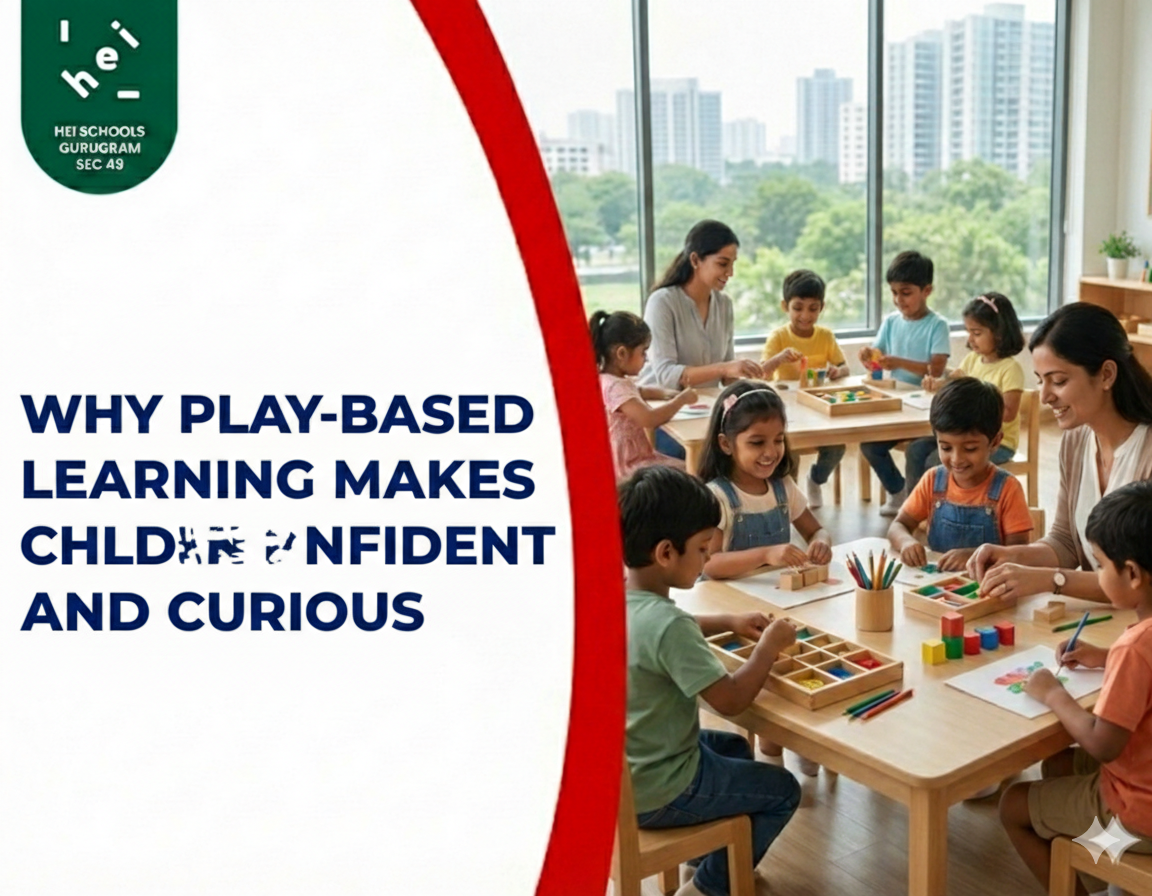
In today’s rapidly evolving world, early childhood education is no longer limited to books and rote learning. At HEI School Gurugram, the Best PreSchools in Gurgaon are embracing play-based learning as a powerful approach that helps children grow emotionally, socially, and intellectually. This method focuses on learning through exploration, creativity, and hands-on experiences—helping young learners build confidence, curiosity, and a lifelong love for learning.
About Us:
At HEI Schools Gurugram Sector 49, we follow Finland’s globally recognized early education model where play is the foundation of learning. Our safe, child-friendly environment encourages exploration through storytelling, creative arts, music, movement, outdoor play, and social interaction. With small class sizes and trained educators, we nurture confidence, curiosity, emotional well-being, and independence. Theme days, cultural celebrations, and hands-on activities ensure children learn joyfully while developing essential life skills for a strong and happy start.
What is Play-Based Learning?
Play-based learning is an educational approach where structured and unstructured play becomes the primary medium for learning. Instead of passive instruction, children actively participate in activities such as role-play, storytelling, building blocks, art, music, and outdoor exploration. These experiences allow them to understand concepts naturally while developing essential life skills.
This method recognizes that young children learn best when they are engaged, interested, and emotionally connected to what they are doing.
Builds Confidence Through Independent Exploration
One of the biggest advantages of play-based learning is the confidence it instills in children. When children are encouraged to make choices—such as selecting activities, solving simple problems, or expressing their ideas—they begin to trust their abilities.
Whether it’s completing a puzzle, performing in a pretend-play activity, or building a structure with blocks, every small achievement boosts their self-esteem. Teachers act as facilitators rather than instructors, guiding children while allowing them the freedom to explore and succeed at their own pace.
This sense of independence helps children become more self-assured, expressive, and willing to take initiative.
Encourages Natural Curiosity
Curiosity is the foundation of lifelong learning. Play-based environments stimulate children’s natural desire to ask questions, experiment, and discover new things.
For example:
- Water play introduces basic science concepts.
- Outdoor exploration develops observation skills.
- Creative art activities encourage imagination.
- Role-playing enhances understanding of real-life situations.
Instead of memorizing information, children learn by doing. This experiential learning approach helps them develop critical thinking and problem-solving skills from an early age.
Strengthens Social and Emotional Skills
Confidence and curiosity grow stronger when children feel emotionally secure. Play-based learning provides multiple opportunities for interaction with peers through group games, collaborative activities, and shared experiences.
Children learn important social skills such as:
- Communication and teamwork
- Sharing and cooperation
- Empathy and emotional expression
- Conflict resolution
These interactions help them build friendships and develop emotional intelligence, which is essential for both academic success and personal growth.
Supports Holistic Development
The Pre Schools focus on overall development rather than academic pressure. Play-based learning supports multiple developmental areas simultaneously:
- Cognitive Development: Problem-solving, memory, and logical thinking
- Language Development: Vocabulary building through conversations and storytelling
- Physical Development: Fine and gross motor skills through movement and play
- Creative Development: Imagination through music, art, and dramatic play
By integrating learning into enjoyable activities, children remain motivated and engaged without feeling stressed.
Prepares Children for Future Learning
Children who experience play-based education develop a positive attitude toward learning. They become active learners who ask questions, explore solutions, and adapt to new environments easily.
Conclusion:
Play-based learning is more than just fun—it is a scientifically proven approach that builds confidence, curiosity, and essential life skills. By allowing children to learn through exploration and creativity, early education becomes a joyful and meaningful experience. Choosing a preschool that prioritizes play-based learning ensures that children grow into confident individuals, curious thinkers, and enthusiastic learners ready to embrace the future.
FAQs:
Q1. How does play-based learning at HEI School build confidence?
At HEI School, children make choices, explore activities independently, and celebrate small achievements. This builds self-belief and encourages them to participate without fear.
Q2. Is play-based learning effective for academic readiness?
Yes. HEI School integrates early literacy and numeracy into play, helping children learn naturally while staying engaged and stress-free.
Q3. How does HEI School encourage curiosity through play?
Through activity corners, outdoor exploration, and hands-on experiences that allow children to ask questions and discover answers.
Q4. Does play-based learning improve social skills?
Absolutely. Group play at HEI School promotes sharing, teamwork, and communication.
Q5. What age groups benefit most from play-based learning?
Children aged 1.5 to 6 years benefit the most, as this is a critical brain development phase.
Q6. Why do parents choose HEI School for play-based education?
Because it combines global practices, safe environments, and personalized attention for holistic growth.
