
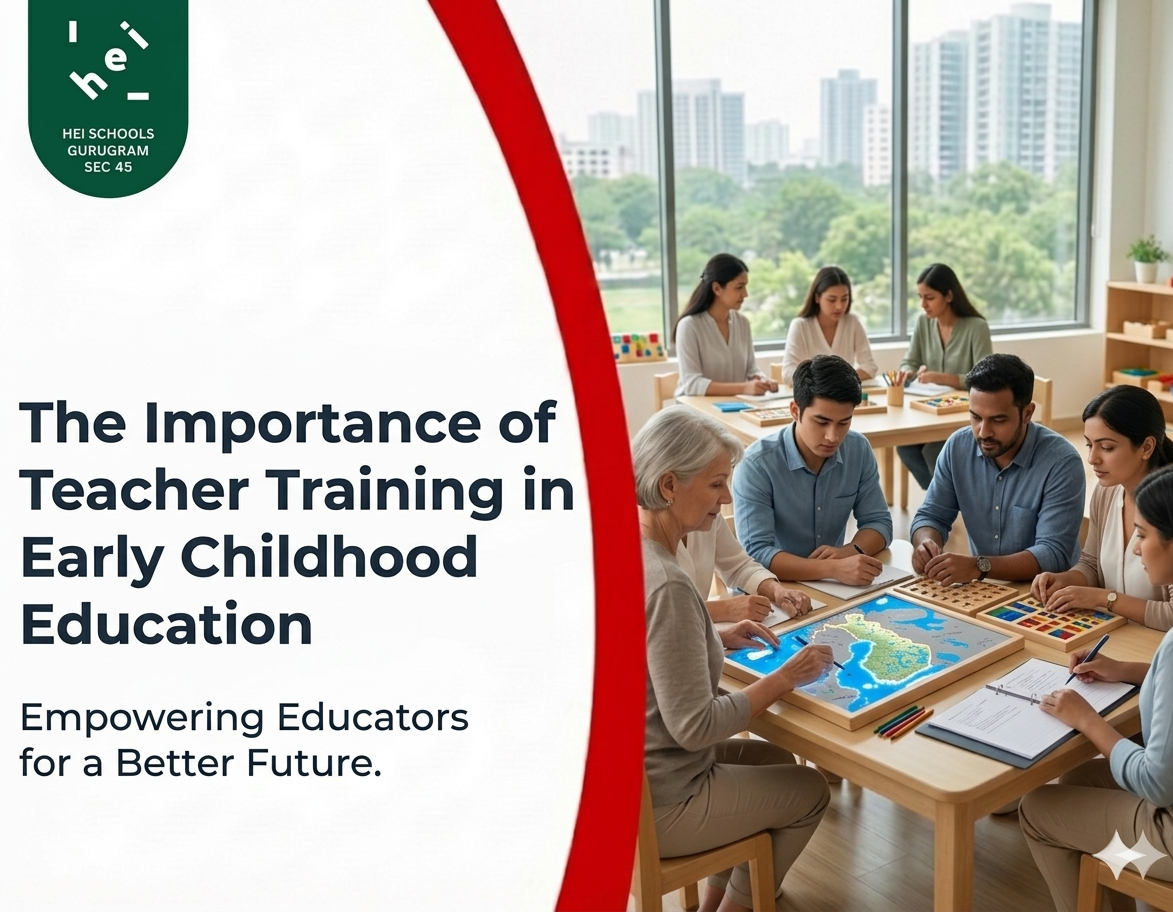
Introduction:
Early childhood education forms the foundation of a child’s lifelong learning journey. At HEI, the Top Pre Schools in Gurgaon where during the early years, children develop essential cognitive, emotional, and social skills that influence their academic success and personal growth. While modern learning environments and engaging activities are important, the most influential factor in early education is the quality of teachers guiding young learners. Well-trained educators understand how children learn, grow, and interact with their environment.
About Us:
At HEI Schools Gurugram Sec 49, educators are continuously trained in modern global teaching practices inspired by Finland’s renowned early education model. Teachers guide children through experiential learning, creative exploration, and collaborative activities that build essential life skills. The learning environment includes STEAM activities, music, art, drama, sports, and creative workshops that encourage curiosity and teamwork.
Understanding the Role of Early Childhood Educators
Teachers in early childhood classrooms do far more than supervise activities. They act as mentors, facilitators, and role models who guide children through their first structured learning experiences. Young learners are naturally curious and energetic, which requires educators to manage classrooms with patience, creativity, and sensitivity.
Professionally trained teachers understand child psychology and developmental milestones. They know how to design activities that stimulate curiosity, encourage exploration, and support individual learning styles. Their ability to observe children carefully allows them to identify each child’s strengths, interests, and areas where additional support may be needed.
Building a Safe and Supportive Learning Environment
Young children thrive in environments where they feel safe, valued, and understood. Teacher training equips educators with the skills required to create such supportive spaces. They learn how to establish routines, manage classroom behavior positively, and encourage respectful interactions among students.
Promoting Effective Teaching Strategies
Early childhood education requires teaching methods that go beyond traditional instruction. Teacher training introduces educators to innovative strategies such as play-based learning, inquiry-based learning, and experiential activities.
For example, a trained teacher might use building blocks to teach basic math concepts or storytelling to enhance language skills. These creative methods encourage children to think critically and develop problem-solving abilities.
Supporting Cognitive and Language Development
One of the primary responsibilities of early childhood educators is to help children develop foundational cognitive and language skills. Teacher training programs focus on helping educators understand how children acquire knowledge during their early years.
Teachers who understand developmental stages can tailor activities to match the learning pace of each child, ensuring that every student receives the support needed to grow academically.
Encouraging Social and Emotional Growth
Children learn many of their first social behaviors in early education environments. Teacher training helps educators guide children in developing empathy, cooperation, and emotional awareness.
A well-trained teacher can recognize emotional cues and respond appropriately, helping children develop resilience and self-confidence.
Enhancing Classroom Management Skills
Managing a classroom full of energetic young learners requires patience and effective strategies. Teacher training provides educators with practical techniques for maintaining a structured yet flexible learning environment.
This balanced approach ensures that children remain engaged and motivated throughout the day while learning valuable life skills such as responsibility and cooperation.
Adapting to Individual Learning Needs
Every child learns at a different pace and has unique interests and abilities. Teacher training helps educators identify these differences and adapt teaching methods accordingly.
Educators trained in inclusive teaching practices can also support children who require additional guidance or encouragement, ensuring every child feels included and valued.
Encouraging Continuous Professional Development
Education is constantly evolving, and teacher training must evolve alongside it. Professional development programs allow educators to stay updated with new research, teaching methods, and technological tools that enhance learning experiences.
Workshops, seminars, and collaborative training sessions help teachers share ideas and improve their classroom practices. Continuous learning ensures educators remain motivated and inspired to provide the best possible education for young learners.
Strengthening Parent–Teacher Collaboration
Teacher training also emphasizes effective communication with parents. Early childhood educators play a key role in informing parents about their child’s progress, behavior, and developmental milestones.
Clear communication helps build trust and ensures that parents remain actively involved in their child’s learning journey. When teachers and parents work together, children receive consistent support both at home and in school.
Regular feedback and collaborative discussions allow educators to better understand each child’s background, interests, and individual needs.
Conclusion:
Teacher training is a vital component of high-quality early childhood education. Skilled educators not only guide children academically but also nurture their emotional, social, and physical development.
With dedicated educators, engaging learning experiences, and a nurturing atmosphere, early childhood education can truly lay the groundwork for confident, curious, and lifelong learners.
FAQs:
- Why is teacher training essential in early childhood education?
Trained teachers understand child development and can create effective learning experiences for young learners. - How does teacher training improve classroom learning?
It equips educators with modern teaching strategies that make learning engaging and developmentally appropriate. - What skills do trained early childhood teachers develop?
They learn classroom management, communication, child psychology, and creative teaching techniques. - How does teacher training benefit children emotionally?
Educators can better recognize children’s emotional needs and provide guidance that builds confidence and security. - Do trained teachers support different learning styles?
Yes, they adapt teaching methods to match individual learning needs and encourage inclusive education. - How does continuous training improve education quality?
Ongoing professional development helps teachers stay updated with new research and innovative teaching practices.