
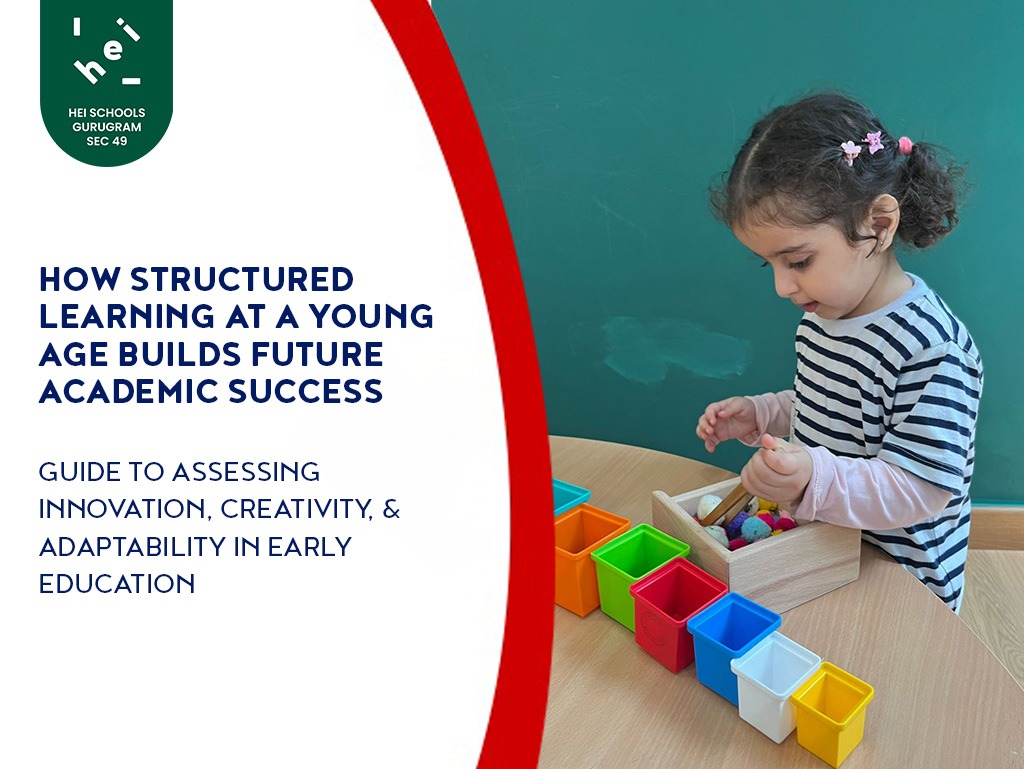
Key Highlights
- Early structured learning builds strong cognitive and language foundations
- Encourages discipline, routine, and independent thinking
- Enhances social and emotional development from the start
- Prepares children for formal schooling with confidence
- Promotes curiosity through guided exploration and play-based structure
- Aligns with global early education standards
Table of Contents
- Introduction
- About Us
- Why Is Structured Learning Important in Early Childhood?
- How Does Routine and Discipline Shape Young Minds?
- Can Structured Learning Improve Social and Emotional Skills?
- How Does Early Learning Prepare Children for Academic Success?
- Structured vs Unstructured Learning – Comparison Table
- Conclusion
- FAQs
Introduction:
The early years of a child’s life are critical in shaping their future academic journey. At HEI School, the best daycare in gurgaon where parents are increasingly recognizing the importance of structured learning during these formative years. A well-balanced approach that combines routine, guided activities, and creative exploration helps children develop essential skills that lay the foundation for lifelong success.
Structured learning does not mean rigid or restrictive education. Instead, it provides a framework where children can explore, learn, and grow within a supportive environment. By introducing age-appropriate routines and activities, early childhood institutions help children build confidence, improve focus, and develop a love for learning that continues throughout their academic life.
About Us:
At HEI School, structured learning is designed to nurture curiosity while maintaining a balanced routine. The approach integrates play-based methodologies with guided instruction, ensuring children develop both academic readiness and essential life skills. With a focus on global practices and child-centric education, the institution creates an environment where young learners thrive.
Why Is Structured Learning Important in Early Childhood?
Structured learning provides children with a sense of stability and direction. When children follow a consistent routine, they feel secure and are better able to focus on learning activities.
Key benefits include:
- Development of early literacy and numeracy skills
- Improved attention span and concentration
- Encouragement of logical thinking and problem-solving
- Better understanding of time and task management
This structured approach ensures that children gain foundational skills while still enjoying the learning process through engaging and interactive methods.
How Does Routine and Discipline Shape Young Minds?
Routine plays a vital role in helping children understand expectations and build self-discipline. In leading Pre Nursery Schools, daily schedules are carefully planned to balance learning, play, and rest.
A structured routine helps children:
- Develop independence by following daily tasks
- Build responsibility and accountability
- Reduce anxiety through predictability
- Transition smoothly between activities
By introducing discipline in a positive and supportive manner, children learn to manage their time and responsibilities effectively from an early age.
Can Structured Learning Improve Social and Emotional Skills?
Yes, structured learning environments significantly contribute to social and emotional development. When children participate in group activities and guided interactions, they learn essential interpersonal skills.
Important outcomes include:
- Improved communication and language skills
- Ability to work collaboratively with peers
- Development of empathy and emotional awareness
- Better conflict resolution skills
Such environments encourage children to express themselves confidently while understanding and respecting others, which is crucial for long-term success.
How Does Early Learning Prepare Children for Academic Success?
Structured learning at an early age equips children with the tools they need to excel in formal education. Parents considering Pre Nursery Schools often look for programs that prepare children for primary schooling without overwhelming them.
Key preparation aspects include:
- Familiarity with classroom settings and expectations
- Development of basic academic skills
- Enhanced confidence and participation
- Ability to follow instructions and complete tasks
These skills create a smooth transition into higher levels of education, reducing stress and improving overall performance.
Structured vs Unstructured Learning – Comparison Table
| Aspect | Unstructured Learning | Structured Learning Approach |
| Learning Style | Free play without guidance | Guided play with clear objectives |
| Skill Development | Random and inconsistent | Systematic and progressive |
| Routine | Flexible but unpredictable | Consistent and organized |
| Academic Readiness | Limited preparation | Strong foundational skills |
| Social Interaction | Informal | Guided and purposeful |
| Confidence Building | Varies | Steady and measurable growth |
Conclusion:
Structured learning in early childhood is a powerful tool that shapes a child’s academic and personal growth. By providing a balanced framework of routine, guidance, and creativity, it helps children develop essential skills that prepare them for future challenges.
For parents exploring Pre Nursery Schools, choosing an institution that emphasizes structured learning can make a significant difference. It not only ensures academic readiness but also nurtures confident, independent, and socially aware individuals who are ready to thrive in any learning environment.
FAQs:
- Why is structured learning important in early childhood?
It builds discipline, focus, and foundational academic skills from a young age. - How do Pre Nursery Schools use structured routines effectively?
They balance learning, play, and rest to create a consistent and engaging daily schedule. - How does structured learning improve academic readiness?
It introduces early literacy, numeracy, and classroom behavior in a gradual manner. - What role does routine play in a child’s development?
Routine creates stability, reduces anxiety, and helps children manage tasks independently. - How does structured learning impact confidence in children?
It helps children understand expectations, boosting their confidence and participation. - What makes structured learning better than unstructured approaches?
It ensures consistent skill development while still allowing creativity and exploration.