
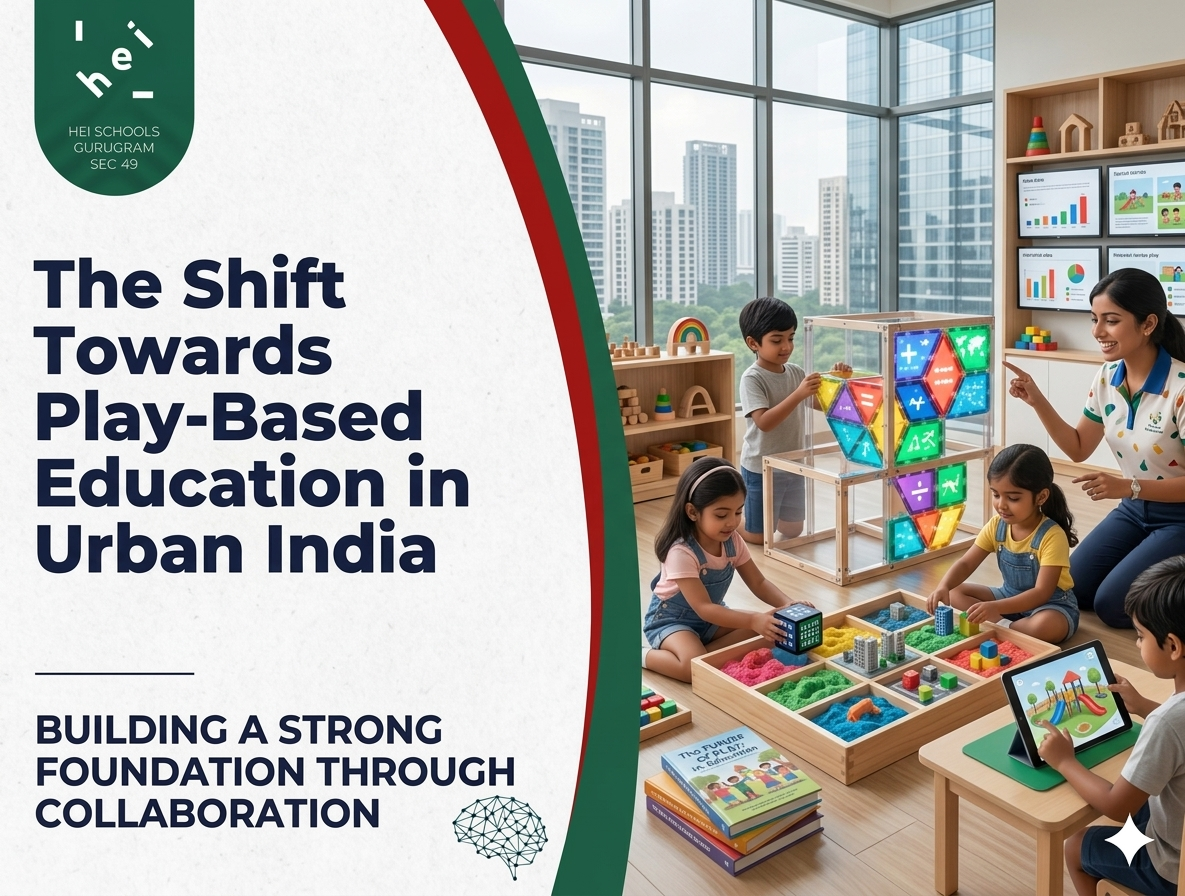
Introduction:
In recent years, there has been a significant shift in early childhood education across urban India, as more and more parents and educators recognize the value of play-based learning in shaping a child’s development. At HEI Schools Gurugram sector 49, the Top PreSchool in Gurgaon where these play-based education is not only an enjoyable experience for children but also a powerful tool that supports their cognitive, emotional, and social growth. This educational approach is gaining momentum in various urban centers, including Gurgaon, where parents are increasingly seeking the preschool options that emphasize learning through play.
About Us:
HEI Schools Gurugram offers a unique approach to education through play-based learning, which empowers children to learn through exploration, creativity, and interaction. By adopting the Finnish Early Education model, we foster holistic development by integrating academic, social, and emotional growth. This approach makes education fun and meaningful, helping children thrive in an urban setting while building essential skills through interactive and imaginative play.
Understanding Play-Based Education
Play-based education is an approach where children learn and develop skills through structured or unstructured play activities. It is grounded in the belief that children’s natural curiosity and creativity are the driving forces behind their learning. Rather than focusing solely on traditional academic methods, such as rote memorization, play-based education allows children to engage with their environment in ways that promote exploration, problem-solving, and critical thinking.
The Benefits of Play-Based Education
-
Promotes Cognitive Development:
Play encourages children to use their imagination, think critically, and develop problem-solving skills. Whether they are building with blocks, role-playing, or solving puzzles, children are constantly exercising their cognitive abilities. This hands-on learning approach helps them grasp concepts more deeply and solidly than through conventional methods. -
Enhances Social Skills:
Interacting with peers during play promotes important social skills such as teamwork, sharing, communication, and conflict resolution. Children learn how to navigate relationships, express emotions, and understand different perspectives, all while playing with others in a safe and supportive environment.
Play-Based Education in Urban India
The rapid urbanization of India has brought about a transformation in the way children are educated, particularly in metropolitan areas like Gurgaon. As parents become more discerning about their children’s educational experiences, there has been a marked shift towards early childhood programs that prioritize emotional and intellectual growth over strict academic performance. This shift is supported by a growing awareness among educators about the benefits of play-based learning.
The Role of Preschools in the Shift Towards Play-Based Learning
Preschools play a crucial role in facilitating the shift towards play-based education in urban India. By incorporating play-based methods into their curricula, these institutions create environments where children can thrive both intellectually and emotionally. These schools design their classrooms to be stimulating and engaging, with various activity zones and learning materials that encourage curiosity and exploration.
Key Characteristics of Play-Based Preschools in Gurgaon
-
Creative Learning Spaces:
Play-based preschools are designed with spacious, open environments where children can move freely, experiment, and explore. The classrooms are filled with materials like art supplies, building blocks, puzzles, and toys that encourage both group and independent play. -
Focus on Social-Emotional Development:
In addition to academic growth, preschools offering play-based education prioritize the development of emotional intelligence. Through guided play, children learn how to manage their emotions, resolve conflicts, and develop empathy and compassion for others. -
Activity-Based Learning:
Rather than focusing on traditional subjects like math and language through textbooks, play-based preschools emphasize learning through engaging activities like storytelling, role-playing, music, and art. These activities allow children to express themselves creatively while reinforcing essential skills like communication and problem-solving.
The Future of Play-Based Education
As urban India continues to evolve, the demand for play-based education is expected to grow exponentially. Parents are becoming more aware of the long-term benefits of this approach and are seeking out the best preschools that prioritize their children’s overall development. This shift not only marks a change in educational trends but also signifies a broader cultural change towards nurturing well-rounded individuals capable of adapting to the complexities of the modern world.
Conclusion:
The growing preference for play-based education in urban India, particularly in Gurgaon, is a testament to the recognition of the critical role that early childhood education plays in shaping a child’s future. With its emphasis on creativity, emotional intelligence, and cognitive development, play-based learning is set to be a cornerstone of education for young children across the country.
FAQs:
-
What is play-based education?
Play-based education focuses on learning through play, where children develop cognitive, emotional, and social skills while engaging in activities they enjoy. -
How does play impact learning in children?
Play enhances creativity, problem-solving, and communication, laying the foundation for future academic success. -
Is play-based education suitable for all children?
Yes, it supports all types of learners by fostering natural curiosity and providing personalized experiences. -
What are the key benefits of play-based learning?
It promotes cognitive growth, social skills, physical development, and emotional intelligence. -
Why is play-based education gaining popularity in India?
Parents and educators recognize its role in building well-rounded children who are ready for future challenges. -
Does HEI School offer play-based education?
Yes, HEI School emphasizes play-based learning to provide a nurturing environment for holistic child development.