
Introduction:
Early childhood is one of the most important stages of human development. At HEI, the Pre Nursery Schools in Gurgaon where during these formative years, children absorb information rapidly, develop essential life skills, and begin forming their understanding of the world around them. Traditional teaching methods alone may not fully meet the developmental needs of young learners. This is why play-based learning has become a widely recognized and effective approach in early childhood education.
About Us:
At HEI Schools Gurugram Sec 49, play-based learning is at the heart of early childhood education. The globally inspired curriculum encourages children to explore, question, and create through interactive activities and collaborative projects. Dedicated spaces for art, music, theatre, science exploration, and outdoor play allow young learners to develop creativity and confidence. Students regularly engage in performing arts, craft workshops, and nature-based learning experiences.
Understanding Play-Based Learning
Play-based learning is an educational approach where play becomes the primary medium for teaching and learning. Instead of focusing solely on structured instruction, children explore concepts through games, storytelling, creative activities, and hands-on experiences.
The purpose is not just entertainment but meaningful engagement that supports overall development. Through play, children learn how to think independently, make decisions, and express their ideas.
Encouraging Natural Curiosity and Exploration
Young children are naturally curious. They ask questions, observe patterns, and experiment with their surroundings. Play-based learning allows this curiosity to flourish.
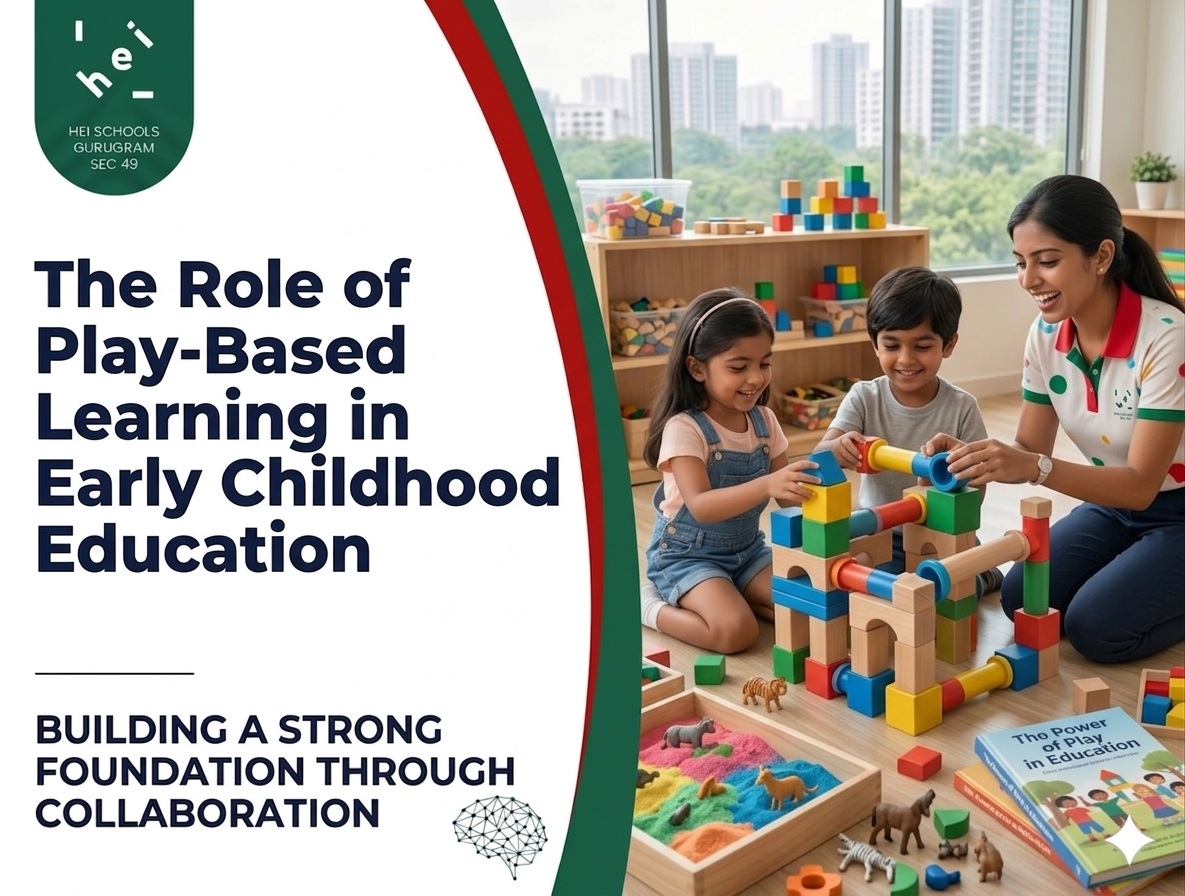
When children are encouraged to explore through play, they develop problem-solving abilities and critical thinking skills. For example, building structures with blocks teaches spatial awareness and creativity, while role-playing activities encourage imagination and communication.
Building Social and Communication Skills
One of the most significant advantages of play-based learning is the opportunity it provides for social interaction. When children participate in group activities, they learn to cooperate, share, and communicate effectively with others.
These early experiences help children become comfortable interacting with others, which is essential for their future educational journey and social development.
Supporting Emotional Development
Play-based learning environments allow children to express themselves freely. Through imaginative play and creative activities, children often express emotions they may not yet have the words to describe.
A supportive play-based environment also reduces pressure and stress associated with rigid academic expectations, making learning enjoyable and meaningful.
Enhancing Cognitive Development
Play stimulates brain development by encouraging children to think, question, and experiment. Activities such as puzzles, sorting games, and creative problem-solving exercises strengthen memory, concentration, and reasoning skills.
For example, building a tower from blocks helps children understand balance and structure, while simple counting games introduce early mathematical concepts. Storytelling and reading activities improve vocabulary and language comprehension.
Developing Physical and Motor Skills
Physical activity is an essential component of play-based learning. Running, jumping, climbing, and other movement-based games help children develop coordination, balance, and motor skills.
Fine motor activities such as drawing, cutting, painting, and assembling puzzles strengthen hand-eye coordination and finger control. These skills are essential for later tasks such as writing and crafting.
Fostering Creativity and Imagination
Creativity is a fundamental skill that begins developing during early childhood. Play-based learning encourages children to imagine new possibilities, create stories, and express themselves through art and movement.
Creative play helps children view challenges from different perspectives and develop innovative thinking skills that will benefit them throughout their lives.
Preparing Children for Future Learning
Play-based learning does more than entertain children—it prepares them for future academic success. When children enjoy learning, they develop a positive attitude toward education.
Through guided play, children build concentration, patience, and curiosity. These qualities help them transition smoothly into more structured learning environments such as kindergarten and primary school.
Strengthening Teacher–Child Relationships
In play-based classrooms, teachers act as facilitators rather than traditional instructors. They observe children’s interests, guide their exploration, and provide support when needed.
This approach helps educators understand each child’s personality, strengths, and learning style. As a result, teaching strategies can be adapted to support individual development.
Creating a Joyful Learning Environment
One of the most important benefits of play-based learning is that it makes education enjoyable. Children who learn through play often develop enthusiasm for discovering new things.
By combining structured guidance with playful exploration, early education programs can create a balanced approach that supports holistic child development.
Conclusion:
Play-based learning has become a powerful method for nurturing young minds during the early years of education. By integrating play with purposeful learning experiences, educators can support children’s cognitive, social, emotional, and physical development. Through creativity, exploration, and meaningful interaction, play-based learning lays the foundation for confident, curious, and lifelong learners.
FAQs:
-
What is play-based learning in early childhood education?
Play-based learning allows children to explore concepts through games, storytelling, and creative activities. -
Why is play important for young children?
Play helps children develop problem-solving skills, creativity, and social abilities while making learning enjoyable. - How does play support cognitive development?
Activities like puzzles, building blocks, and role-play strengthen memory, reasoning, and early learning skills. - Can play-based learning prepare children for formal schooling?
Yes, it helps build curiosity, communication skills, and confidence that support future academic success. - What role do teachers play in play-based classrooms?
Teachers guide activities, encourage exploration, and ensure children learn meaningful concepts through play. - Does play-based learning include academic concepts?
Yes, early literacy, numbers, and language skills are introduced naturally through engaging play activities.